
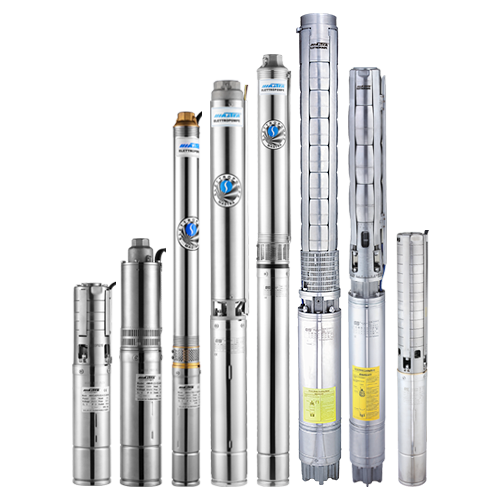
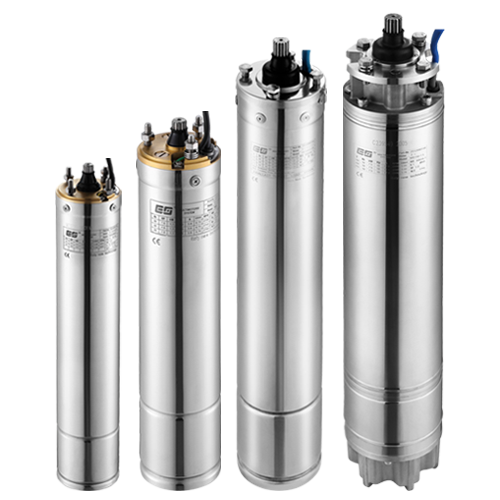
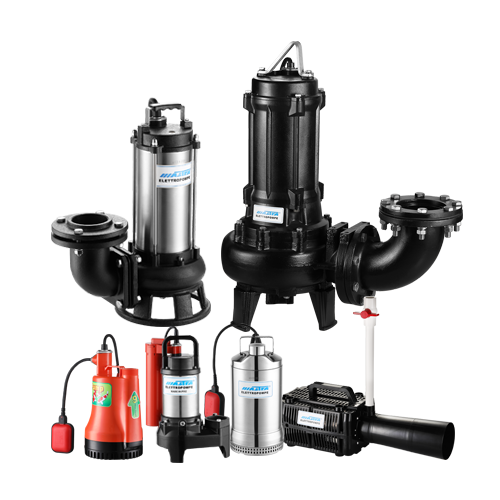
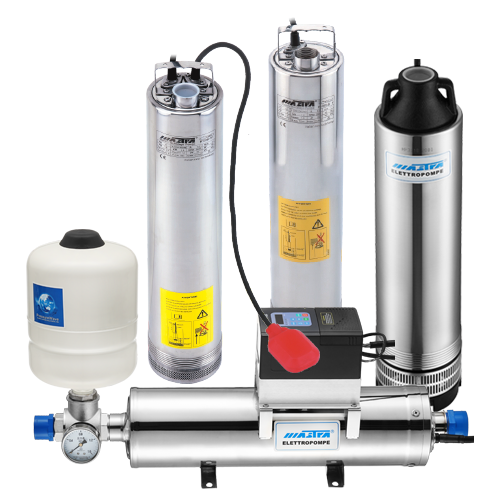
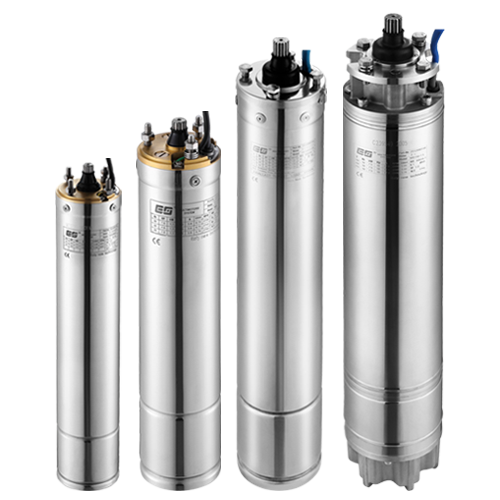
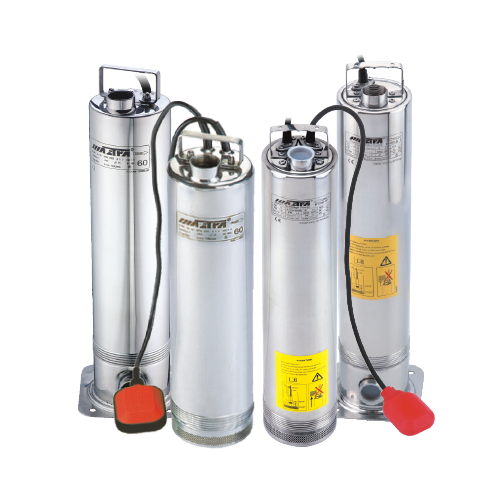
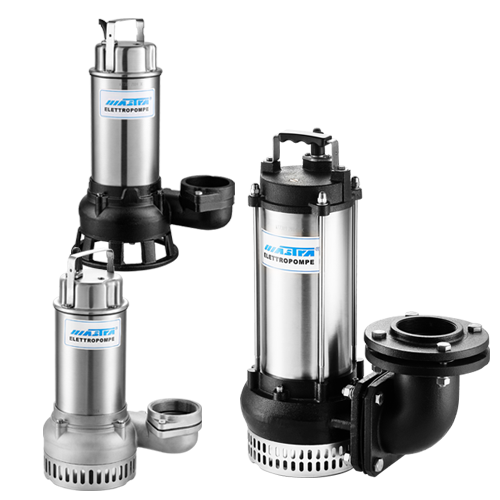




Choosing the correct horsepower (HP) for a submersible well pump is one of the most important decisions in any water supply project. Select too little power and the pump underperforms; select too much and you waste energy and risk damaging the system. This guide breaks down every major HP range—from 1/2 HP residential units to 15 HP industrial-grade submersible pumps—and provides practical selection formulas based on flow rate (GPM) and total head (meters or feet) to help engineers, contractors, and buyers make the right call.
What Does HP Mean for a Submersible Well Pump?
Horsepower (HP) measures the motor's output power inside a submersible pump. A higher HP rating allows the pump to move more water (higher flow rate, measured in gallons per minute or GPM) against greater resistance (measured as total dynamic head, or TDH, in feet or meters). Matching HP to the actual hydraulic demand of a system—rather than simply buying the largest available unit—is critical for efficiency, longevity, and cost control.
Key formula for HP estimation:
Required HP = (Flow Rate in GPM × Total Head in feet) ÷ (3,960 × Pump Efficiency)
Where pump efficiency typically ranges from 0.50 to 0.75 for standard submersible pumps. Always apply a 10–15% safety margin to the calculated figure before selecting a model.
HP Range Breakdown by Application
1/2 HP to 3/4 HP — Residential Households and Light Commercial Use
Best for: Single-family homes, small cottages, light commercial buildings, and shallow borehole applications.
A 1/2 HP or 3/4 HP submersible well pump is well suited to scenarios where water demand is moderate and the static water level is relatively shallow. These units typically deliver flow rates of 5–15 GPM and can handle total heads of up to 150–200 feet, making them appropriate for:
Single-family residential water supply (drinking water, irrigation, indoor plumbing)
Small livestock watering stations
Light commercial applications such as small offices or retail units
Boreholes with depths up to approximately 100–150 feet
Selection guidance for this range:
Confirm your household peak demand (typically 3–5 GPM per fixture, with a safety margin)
Measure or estimate static water depth and add pipe friction losses to calculate TDH
A 1/2 HP unit handles most homes with 1–2 bathrooms; step up to 3/4 HP for larger households or where TDH exceeds 150 feet
Example calculation: A household requiring 10 GPM at a TDH of 120 feet, with a pump efficiency of 0.60:
Required HP = (10 × 120) ÷ (3,960 × 0.60) = 1,200 ÷ 2,376 ≈ 0.50 HP
A 1/2 HP submersible pump meets this demand precisely, with a 3/4 HP unit recommended if additional fixtures or future expansion are anticipated.
2 HP to 5 HP — Agricultural Irrigation and Community Water Supply
Best for: Farms, smallholder irrigation systems, community boreholes, and small municipal water supply networks.
Mid-range submersible pumps in the 2–5 HP bracket are the workhorses of agricultural and community water supply. These units can deliver flow rates of 20–80 GPM and manage TDH values in the range of 200–500 feet, depending on the specific model and configuration.
Typical applications include:
Drip and sprinkler irrigation for small to medium farms
Community water supply for villages or multi-household compounds
Greenhouse and nursery irrigation
Aquaculture and fishery water circulation
Small industrial process water supply
Selection guidance for this range:
Calculate peak irrigation demand in GPM using crop area, application rate, and system efficiency
Factor in seasonal variability—peak summer demand may be 30–50% higher than average
A 2 HP unit suits farms up to 10–15 acres under drip irrigation; scale to 5 HP for larger acreage or where TDH is significant (deep boreholes, elevation change)
Example calculation: An irrigation system requiring 45 GPM at a TDH of 250 feet, with 65% pump efficiency:
Required HP = (45 × 250) ÷ (3,960 × 0.65) = 11,250 ÷ 2,574 ≈ 4.37 HP
A 5 HP submersible pump is the appropriate selection, providing the necessary capacity with operating headroom.
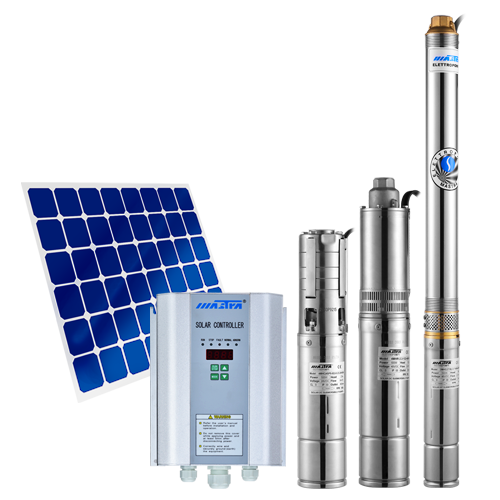
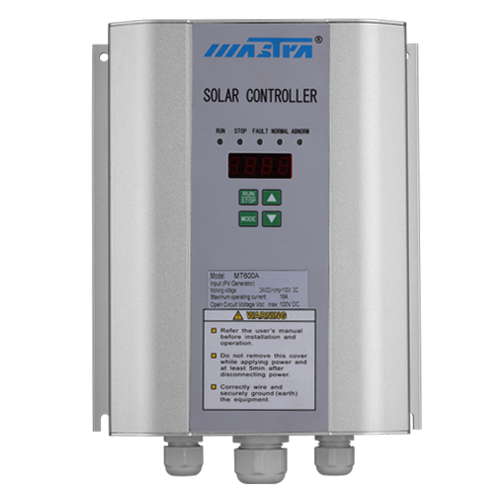
Note: In this power range, it is worth evaluating solar-powered submersible pump systems where grid electricity is unavailable or unreliable. Manufacturers such as MASTRA (mastrapump.com) offer solar water pump systems specifically designed for off-grid agricultural use.
10 HP to 15 HP — Industrial, Mining, and Municipal Applications
Best for: Large-scale industrial facilities, mine dewatering, municipal water treatment plants, and high-rise building supply.
High-power submersible pumps in the 10–15 HP range are engineered for demanding, continuous-duty environments where both flow rate and TDH requirements are substantial. These units commonly deliver 100–300+ GPM and can operate against total heads exceeding 600–1,000 feet, depending on staging and configuration.
Applications in this range include:
Municipal water supply and distribution networks
Mine dewatering and groundwater control
Large-scale industrial process water
Deep borehole extraction (250 meters or more)
High-rise building and campus water pressure systems
Large agricultural schemes and irrigation districts
Selection guidance for this range:
Conduct a full hydraulic analysis of the system, including pipe diameter, flow velocity, friction losses, and static head
For mining applications, account for variable inflow rates and use a pump curve to ensure the selected unit operates near its Best Efficiency Point (BEP)
Municipal applications typically require dual-pump redundancy and variable frequency drives (VFDs) for load management
Stainless steel construction (e.g., 316L grade) is strongly recommended for corrosive or aggressive groundwater conditions
Example calculation: A municipal borehole requiring 180 GPM at a TDH of 600 feet, with 70% pump efficiency:
Required HP = (180 × 600) ÷ (3,960 × 0.70) = 108,000 ÷ 2,772 ≈ 38.96 HP
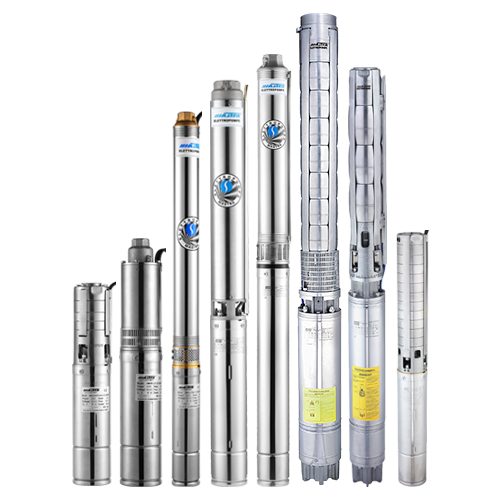
In practice, this system would use multiple staged pumps or a multi-stage submersible pump configuration to achieve the required head. A 15 HP multi-stage unit may serve as one stage in a series installation. MASTRA's SP series stainless steel submersible borehole pumps (available in 6-inch, 8-inch, and 10-inch configurations) are designed for this class of application.

Key Factors That Affect Submersible Pump HP Selection
Beyond flow rate and TDH, several additional variables influence the correct HP choice for a submersible well pump:
Well diameter and casing size — Larger casings (e.g., 6-inch, 8-inch, 10-inch) accommodate higher HP motors and larger pump bodies
Water quality — Corrosive, sandy, or mineral-laden water requires materials such as 316L stainless steel to prevent premature wear
Power supply — Single-phase supply is standard for 1/2–2 HP units; three-phase is required for most 3 HP and above
Frequency — 50Hz vs. 60Hz electrical systems require matched pump models; mismatched frequency reduces efficiency and can damage motors
Duty cycle — Continuous-duty industrial applications demand more robust motor insulation ratings than intermittent residential use
Altitude — At high elevations, reduced atmospheric pressure affects pumping performance and should be factored into TDH calculations
HP Selection Summary Table
HP Range | Typical Flow Rate (GPM) | Typical TDH (ft) | Primary Application |
|---|---|---|---|
1/2 – 3/4 HP | 5 – 15 | Up to 200 | Residential, light commercial |
1 – 2 HP | 10 – 30 | Up to 300 | Small farms, multi-unit residential |
3 – 5 HP | 25 – 80 | Up to 500 | Agriculture, community water supply |
7.5 HP | 60 – 120 | Up to 600 | Large farms, light industrial |
10 – 15 HP | 100 – 300+ | 500 – 1,000+ | Industrial, mining, municipal |
Note: Values are indicative. Always consult the pump curve for your specific model.
How to Verify Your Selection: Using the Pump Curve
Every reputable submersible pump manufacturer provides a pump performance curve (Q-H curve) for each model. This graph plots flow rate (Q, in GPM or m³/h) on the horizontal axis against total head (H, in feet or meters) on the vertical axis. To verify an HP selection:
Plot your required operating point (design GPM and TDH) on the graph
Confirm the point falls within the pump's recommended operating range—ideally near the BEP
Check that the corresponding motor power (HP) at that point does not exceed the rated motor HP
Verify NPSH (Net Positive Suction Head) requirements are met for the installation depth
Contact your submersible pump manufacturer directly to obtain model-specific pump curves and receive application engineering support.
Frequently Asked Questions
Q: Can I use a higher HP submersible pump than calculated to get more water flow?
A: Oversizing a submersible pump is not recommended. A pump operating far from its Best Efficiency Point (BEP) draws more current, generates excess heat, and wears mechanical seals and impellers prematurely. Always size as close to the design operating point as the available model range permits.
Q: What is the difference between a 50Hz and 60Hz submersible pump, and does it affect HP selection?
A: Yes. A 50Hz pump (common in Europe, Asia, Africa, and Australia) runs at a lower synchronous speed than a 60Hz unit (standard in North America). Running a 50Hz pump on a 60Hz supply increases speed, flow, and power draw—potentially overloading the motor. Always confirm the electrical supply frequency before selecting a model, and source the correct variant from your submersible pump manufacturer.
Q: How often should I replace a submersible well pump motor?
A: Service life varies by application intensity, water quality, and maintenance practices. Residential submersible pumps in clean groundwater conditions typically last 10–15 years. Industrial or agricultural units operating continuously in corrosive or sandy water may require inspection or overhaul every 3–5 years. Units built with 316L stainless steel components—such as those offered by MASTRA—generally achieve longer service intervals in aggressive water conditions.
Q: Does borehole depth alone determine the HP I need?
A: Borehole depth is one component of Total Dynamic Head (TDH), but it is not the only factor. TDH also includes static water level, drawdown depth during pumping, friction losses in the rising main, and any elevation difference between the pump discharge and the delivery point. A shallow borehole supplying a tank at significant elevation may require a higher HP pump than a deeper borehole discharging at ground level.
About MASTRA Submersible Pumps
MASTRA is the export brand of Guangdong Ruirong Pump Industry Co., Ltd., a large-scale high-tech submersible pump manufacturer based in Jiangmen City, Guangdong Province, China. With over 33 years of production experience, Ruirong has been recognized as a Guangdong Innovative Enterprise and Guangdong Famous Export Enterprise, exporting to more than 120 countries and regions.
MASTRA's submersible pump range covers 3-inch through 10-inch borehole pumps, available in both 50Hz and 60Hz configurations, with full stainless steel (304 and 316L) construction options for corrosive applications. The range spans residential 1/2 HP units through heavy-duty multi-stage industrial configurations, supported by a dedicated pump selection tool at mastrapump.com/Pump-selection.html.
For product catalogs, technical specifications, and OEM cooperation inquiries, visit mastrapump.com or contact the MASTRA team directly.


Get Touch With Us
Contact Info
0086-139 2903 3707
+86 138 2702 0863
No.22, North 3rd Road, Duruan Town, Jiangmen City, Guangdong Province, China
Related Products