




When you look at the specifications for a submersible water pump, the first number you usually see is the "Max Head" or "Total Dynamic Head." This tells you exactly how high the pump can lift water vertically. But real-world applications are rarely just about lifting water straight up. You might need to move water from a creek to a garden 500 feet away, or from a deep well to a storage tank across a field.
So, the burning question remains: how does that vertical lifting power translate to horizontal distance? The answer isn't a single fixed number, but rather a calculation based on friction, pipe size, and pressure. Understanding this conversion is the key to ensuring you don't buy an underpowered unit for your property.
What is the relationship between vertical head and horizontal distance?
In the world of fluid dynamics, horizontal distance is significantly easier for a pump to manage than vertical height. Gravity is the main enemy when lifting, but friction is the main enemy when pushing horizontally.
A generally accepted "rule of thumb" in the industry helps give a rough estimate before you do the precise math.
The General Rule:
For every 1 foot of vertical head capability, a pump can push water approximately 10 feet horizontally.
However, this is a simplified estimate. If your submersible pump is rated for a 100-foot head, it doesn't automatically mean it will push water exactly 1,000 feet. The actual distance depends heavily on the friction created inside the pipes.
Vertical vs. Horizontal Capability
Pump Max Head Rating (Vertical) | Theoretical Horizontal Distance (Approximate) |
|---|---|
20 Feet | 200 Feet |
50 Feet | 500 Feet |
100 Feet | 1,000 Feet |
200 Feet | 2,000 Feet |
Note: This table assumes minimal friction loss and a flat surface. Slopes and narrow pipes will reduce these figures.
How does pipe diameter affect horizontal distance?
This is the most critical variable that pump owners often overlook. The diameter of your pipe determines how much friction the water encounters as it travels.
Think of it like traffic on a highway. If you try to push a high volume of water through a narrow pipe (like a garden hose), the water rubs against the walls of the pipe, creating resistance. This resistance—called friction loss—eats up your pump's pressure. The wider the pipe, the lower the friction, and the further the water can travel.
If you are trying to push water over a long distance, increasing your pipe diameter from 1 inch to 1.5 inches can dramatically increase the flow rate and distance, even without upgrading the pump itself.
Friction Loss Per 100 Feet of Pipe (At 10 GPM Flow Rate)
Pipe Diameter | Friction Head Loss (in feet) | Effect on Pump |
|---|---|---|
3/4 Inch | 18.2 ft | High Resistance: drastically reduces distance. |
1 Inch | 5.8 ft | Moderate Resistance: standard for short runs. |
1 1/4 Inch | 1.5 ft | Low Resistance: good for longer distances. |
1 1/2 Inch | 0.7 ft | Very Low Resistance: ideal for long horizontal runs. |
Does the type of submersible pump matter?
Yes, the engineering of the pump plays a massive role. Different pumps are designed for different pressure outputs.
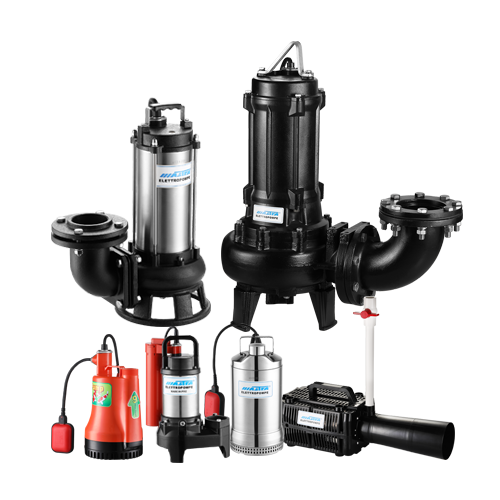
Standard Dewatering Pumps: These are designed to move high volumes of water but often have low head pressure. They are great for emptying a pool but poor for pushing water 500 feet through a hose.
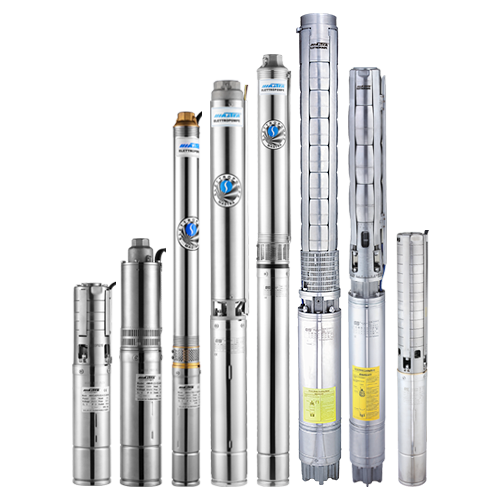
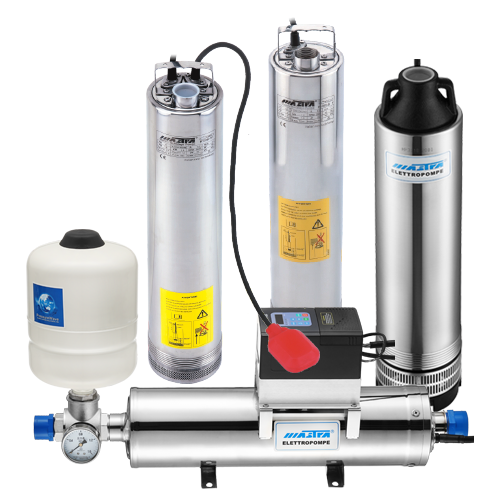
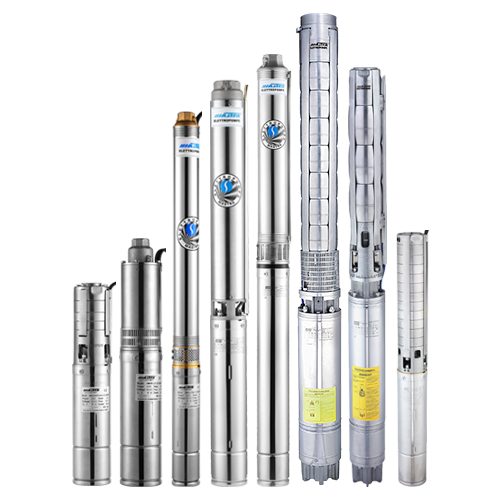
Deep Well Submersible Pumps: Manufacturers like MASTRA Pump design these units with multiple stages (impellers). These are built specifically to generate high pressure. A high-pressure submersible pump is much better suited for long horizontal pushes because it has the raw power to overcome pipe friction.

How do you calculate the exact requirement?
To get an accurate setup, you shouldn't rely solely on the 1:10 rule. You need to calculate the Total Dynamic Head (TDH).
The Formula:
Vertical Lift + Friction Loss = Total Dynamic Head
Measure Vertical Lift: The height difference between the water source and the discharge point.
Calculate Friction Loss: Look up a friction loss chart for your specific pipe size and length.
Add Them Together: If you have 20 feet of vertical lift and your long pipes create 30 feet of friction head pressure, you need a pump rated for at least 50 feet of head—not just 20.
1
Maximizing your pumping efficiency
Moving water horizontally is less about fighting gravity and more about managing friction. By selecting a high-quality submersible water pump with adequate head pressure and pairing it with the correct pipe diameter, you can move water over impressive distances.
If you are unsure about the specific friction curves or need a pump capable of handling a complex landscape, it is always best to check the manufacturer's performance curve. This ensures your water reaches its destination with the flow rate you expect.
submersible water pump
submersible pump
water pump


Get Touch With Us
Contact Info
0086-139 2903 3707
+86 138 2702 0863
No.22, North 3rd Road, Duruan Town, Jiangmen City, Guangdong Province, China
Related Products