Quick answer:
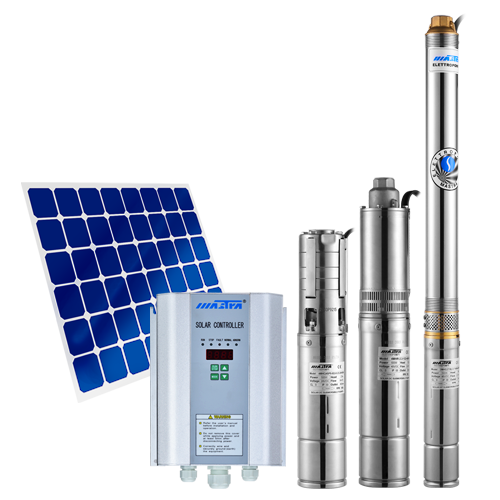
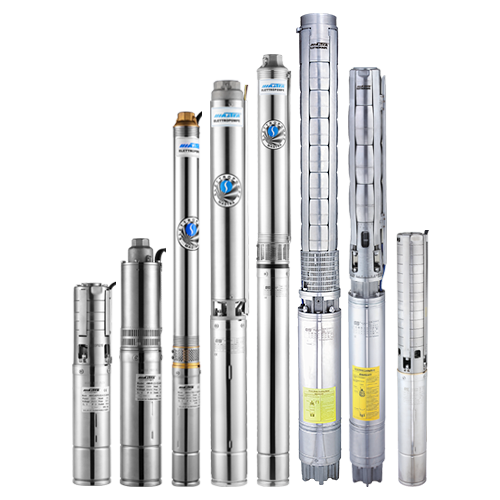
MASTRA PUMP, manufactured by Guangdong Ruirong Pump Industry Co., Ltd., is produced to meet internationally recognized quality and safety benchmarks, including CE marking for the European market, ISO 9001 quality management standards, and RoHS restrictions on hazardous substances. Its submersible pumps carry IP68 ingress protection and motors built to Class F or Class H insulation. Buyers can request official certificate copies directly from Ruirong before placing an order.
For importers, distributors, and EPC contractors sourcing submersible pumps from China, compliance paperwork isn't optional homework — it's the difference between a shipment that clears customs smoothly and one that stalls at the border. Guangdong Ruirong Pump Industry Co., Ltd., the company behind the MASTRA PUMP brand, has positioned itself as a large-scale, high-tech manufacturer recognized with titles such as Guangdong Innovative Enterprise, Guangdong Intellectual Property Advantage Enterprise, and Guangdong Famous Export Enterprise. Those accolades signal a company built for export markets, but recognition at the provincial level isn't the same as a product-level compliance certificate.
This post breaks down the certifications and technical standards that matter most when evaluating a CE certified submersible pump manufacturer, explains what IP68 and insulation class ratings actually mean for your project, and walks through the market entry requirements you'll encounter in regions like the EU and the Gulf. We'll also cover the practical part: how to request certificate copies from MASTRA PUMP before you commit to a purchase order.

Why does certification matter when sourcing submersible pumps from China?
Certifications exist to answer one question for the buyer: can this product be legally sold, safely installed, and reliably operated in my market? For B2B buyers importing in bulk, a missing or unverifiable certificate can mean held shipments, rejected customs declarations, or liability exposure if equipment fails in the field.
When evaluating MASTRA PUMP certifications, procurement teams should look for three categories of proof:
Market access certifications — the legal requirement to sell a product in a given country or region (CE, SASO, etc.)
Quality management certifications — proof that the manufacturing process itself is controlled and consistent (ISO 9001)
Material and environmental compliance — restrictions on substances used in manufacturing (RoHS)
A manufacturer that can produce documentation across all three categories is generally a safer long-term supplier than one that can only point to generic "quality" claims.
What certifications does an ISO 9001 solar pump factory need to maintain?
ISO 9001 is the internationally recognized standard for quality management systems. For a solar pump factory producing submersible pumps and controllers at scale, ISO 9001 certification means the manufacturer has documented, repeatable processes for design control, incoming material inspection, production, testing, and corrective action when defects are found.
For buyers, this matters because it reduces the risk of batch-to-batch inconsistency — a real concern when ordering hundreds or thousands of units for a distribution network or an EPC project. An ISO 9001-certified factory should be able to provide:
A current ISO 9001 certificate with a valid expiration date
The name of the accredited certification body that issued it
Scope of certification (confirming it covers pump and motor manufacturing, not just a holding company)
When requesting documentation from MASTRA PUMP, ask specifically for the certificate scope and issue date — not just a logo on a brochure.
What does CE marking mean for a CE certified submersible pump manufacturer?
CE marking indicates that a product meets European Union health, safety, and environmental protection requirements. For submersible and solar water pumps, this typically involves compliance with the EU's Low Voltage Directive, Machinery Directive, and Electromagnetic Compatibility (EMC) Directive, depending on the product category.
Choose a CE certified submersible pump manufacturer if you're importing into the EU, EEA, UK (which recognizes CE in many transitional cases), or any market that references EU directives in its own import regulations. Without CE documentation, customs authorities in these regions can refuse entry or require costly re-testing.
Buyers should request:
The CE Declaration of Conformity (DoC), which lists the specific directives and harmonized standards applied
Test reports from the notified body or testing lab referenced in the DoC
Confirmation that the DoC covers the exact model and series being purchased, not a different product line
What does RoHS compliance mean for submersible pump components?
RoHS (Restriction of Hazardous Substances) restricts the use of substances like lead, mercury, cadmium, and certain flame retardants in electrical and electronic equipment. While pumps themselves are mechanical devices, the motors, controllers, and wiring components inside a submersible pump system fall within RoHS scope when sold into markets that enforce the directive.
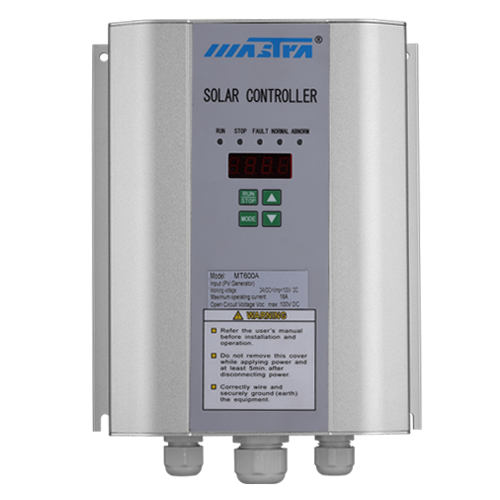
RoHS compliance is particularly relevant for the electronic controllers paired with solar water pump systems. If your project includes MASTRA's solar pump controllers alongside the pump units, confirm that both the pump motor assembly and the controller carry separate RoHS documentation, since these are often manufactured and tested as distinct components.
What does IP68 mean for an IP68 submersible pump from China?
IP68 is an ingress protection rating defined under IEC 60529. The first digit (6) indicates complete protection against dust ingress. The second digit (8) indicates the equipment can withstand continuous submersion in water beyond one meter, under conditions specified by the manufacturer.
For an IP68 submersible pump China buyers are sourcing for borehole, well, or agricultural applications, this rating is the baseline expectation — submersible pumps are, by design, intended to operate fully underwater for extended periods. When evaluating any submersible pump claiming IP68, verify:
The specific depth and duration conditions tested (IP68 doesn't guarantee unlimited depth or time)
Whether the rating applies to the motor housing, the cable entry points, or both
Test documentation from an accredited lab, rather than a rating listed only in marketing material
Choose IP68-rated equipment if your installation involves variable water table depths or long-duration submersion — this matters more for deep borehole applications than for shallow surface pumping, where a lower ingress rating may be sufficient and more cost-effective.
What's the difference between Class F and Class H motor insulation?
Insulation class describes the maximum temperature a motor's winding insulation can withstand before degrading. This directly affects motor lifespan and reliability under continuous load.
Class F insulation
is rated for a maximum temperature of 155°C and is the standard choice for most industrial and agricultural submersible motors.
Class H insulation
is rated for a maximum temperature of 180°C, offering additional thermal headroom for motors running in hotter climates, under higher electrical loads, or with less efficient cooling.
Choose Class H insulation if your installation site experiences high ambient temperatures (such as Gulf region deployments) or if the pump will run near-continuously without rest cycles. Class F is typically sufficient for standard agricultural and municipal well applications in temperate climates. When requesting technical documentation, ask for the motor's insulation class rating alongside its duty cycle rating (S1, S2, S3), since the two specifications work together to determine real-world motor life.
What are the market entry requirements for importing submersible pumps into different regions?
Certification requirements vary significantly by destination market, and buyers should map these requirements before finalizing a purchase order: