Quick answer:
MASTRA PUMP, the brand of Guangdong Ruirong Pump Industry Co., Ltd., controls quality through three checkpoints — incoming material inspection (IQC), in-process inspection (IPQC), and outgoing quality control (OQC). Each submersible pump is tested for insulation resistance, pressure tolerance, flow and head performance, IP68 waterproofing, and noise/vibration levels before leaving the factory, with results backed by ISO 9001 certification and third-party test reports.
Buying a submersible pump from overseas is a leap of faith. You can't walk the factory floor, watch the welders work, or run the pump yourself before it ships. So how do you know the pump arriving at your port will actually perform the way the spec sheet promises?
That question sits at the center of nearly every procurement decision in the pump industry. A low price means little if the motor burns out within six months or the seal fails the first time it's submerged. Quality control isn't a marketing slogan — it's the mechanism that determines whether a buyer's trust is well placed.
MASTRA PUMP, produced by Guangdong Ruirong Pump Industry Co., Ltd., builds its reputation as a reliable submersible pump factory on a documented, three-stage inspection process rather than vague assurances. Below is a breakdown of how that process works, the specific tests involved, and the certifications that back it up.

What are the three stages of MASTRA PUMP's quality control process?
Quality control at a pumps manufacturer like MASTRA PUMP isn't a single checkpoint at the end of the line — it's embedded at three distinct stages of production. This layered approach catches defects early, when they're cheaper and easier to correct, rather than discovering them after a pump has already been assembled, boxed, and shipped.
In-Process Quality Control (IPQC): monitoring the production line itself
Before any raw material or component enters the production line, it passes through Incoming Quality Control. This stage verifies that stainless steel components, copper windings, cables, and seals meet the required specifications before they're approved for use.
Why does this matter so much for submersible pumps specifically? These pumps operate fully submerged in water, often for years without inspection. A substandard seal or an inferior grade of stainless steel might not fail immediately, but it will fail eventually — usually at the worst possible time, deep in a borehole or buried in a well. IQC exists to stop those weak components from ever reaching the assembly line.
In-Process Quality Control (IPQC): monitoring the production line itself
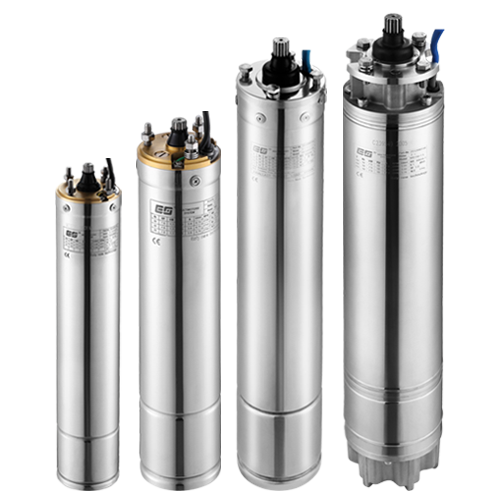
Once materials are approved, IPQC takes over. This stage involves inspection at multiple points during assembly, including motor winding, impeller fitting, and housing assembly. The goal is to catch deviations in real time, rather than relying solely on a final check once the product is complete.
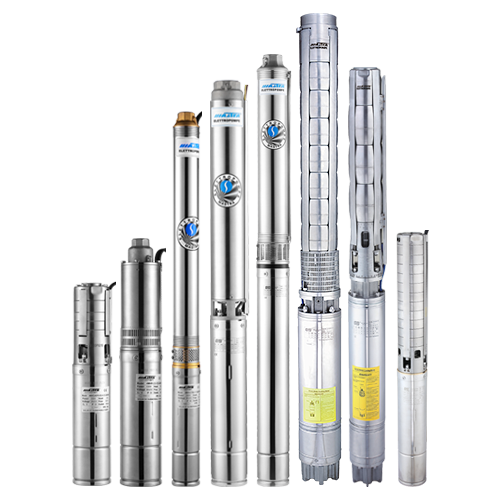
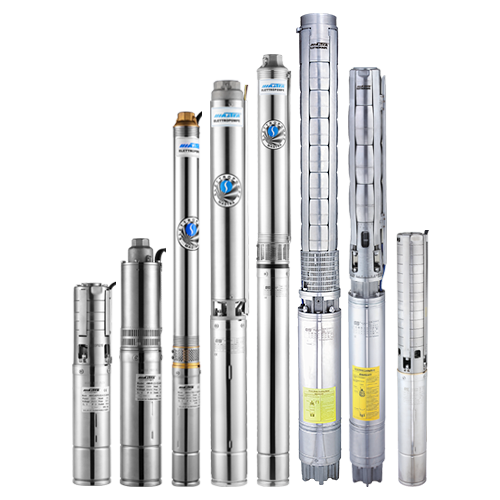
For a submersible pump factory producing pumps across multiple series — from 3-inch deep well pumps to 10-inch stainless steel borehole pumps — in-process checks are what keep quality consistent across different product lines and production batches.
Outgoing Quality Control (OQC): final testing before shipment
The last stage, OQC, is where every finished pump undergoes functional testing before it's cleared for packaging and export. This is the stage most directly tied to a buyer's confidence, because it determines whether the specific unit being shipped actually performs to spec.
What specific tests does MASTRA PUMP run during the submersible pump QC process?
A pump can look flawless and still fail under real-world conditions. That's why MASTRA PUMP's submersible pump QC process includes several targeted performance tests, each designed to verify a different aspect of the pump's reliability.
Insulation resistance testing
Measures the electrical insulation of the motor windings to confirm there's no risk of current leakage, which is critical for both safety and motor longevity.
Pressure (hi-pot) testing
Applies high voltage to check that the motor can withstand electrical stress without breakdown, helping prevent premature motor failure.
Flow and head (lift) testing
Confirms the pump delivers the flow rate and pumping head stated on its performance curve, so buyers aren't left with a pump that underdelivers once installed.
Verifies the pump's sealing can withstand continuous submersion, which is the baseline requirement for any submersible application.
Noise and vibration testing
Checks for abnormal mechanical noise or vibration, which often signals bearing issues, imbalance, or assembly defects before they become field failures.
Choose a supplier that documents results from all five of these tests if your application involves long-term, unattended operation — such as agricultural irrigation or municipal water supply — where a failure is costly and difficult to diagnose remotely. For short-term or easily serviceable installations, flow/head and IP68 testing alone may be sufficient reassurance.
Why do ISO 9001 pump manufacturer certification and third-party reports matter?
Internal testing is only as credible as the system verifying it. This is where certification and independent verification come in.
MASTRA PUMP operates under ISO 9001 certification, the internationally recognized standard for quality management systems. For buyers, an ISO 9001 pump manufacturer certification signals that quality control isn't ad hoc — it's governed by documented procedures, regular audits, and continuous improvement requirements.
CE certification adds another layer, confirming that products meet the relevant European health, safety, and environmental protection standards. Together with CE marking, ISO 9001 certification gives procurement teams a baseline they can reference without having to take every performance claim on faith.
Beyond internal certification, MASTRA PUMP also provides pump factory testing reports generated by independent third parties. This distinction matters: a factory testing its own pumps and reporting the results is useful, but a third party verifying those same results removes the possibility of bias. For procurement teams managing supplier risk, requesting a third-party test report alongside the standard specification sheet is one of the simplest ways to confirm quality claims before placing a large order.
What does this mean if you're sourcing submersible pumps?
Quality control is the trust mechanism behind every pump sourcing decision made at a distance. For buyers evaluating a reliable submersible pump factory, the questions worth asking aren't about branding — they're about process. Does the manufacturer inspect incoming materials? Does it monitor quality during assembly, not just at the end? Does it test insulation resistance, pressure tolerance, flow, waterproofing, and vibration on every unit, or only on samples? And can it produce third-party documentation to back up those claims?
Guangdong Ruirong Pump Industry Co., Ltd., through its MASTRA PUMP brand, structures its production around exactly these checkpoints. If your next sourcing decision depends on pumps that perform reliably for years in the field — not just on paper — these are the details worth requesting before you sign a purchase order.