Deep Well Submersible Pump vs. Solar Submersible Pump: Which Fits Your Off-Grid Project?
Views: 5
Author: Site Editor
If your site has stable grid power, a traditional deep well submersible pump paired with a generator is usually the more cost-effective choice. If you're working in a remote area with no grid access or an unreliable power supply, a solar submersible water pump is typically the better long-term solution. The right choice comes down to one question: how reliable is your power source?
Many buyers sourcing a submersible pump off-grid find themselves torn between two options: stick with a conventional deep well submersible pump backed by a generator, or switch to a solar submersible water pump system. Both are proven technologies, but they serve different needs. Below, we break down how each works, where each performs best, and how to decide which fits your project.

What Is a Deep Well Submersible Pump?
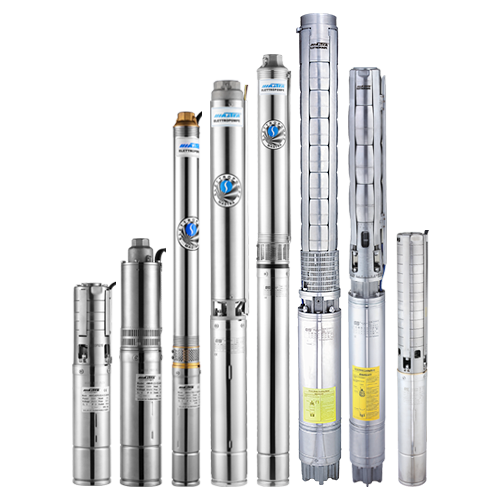
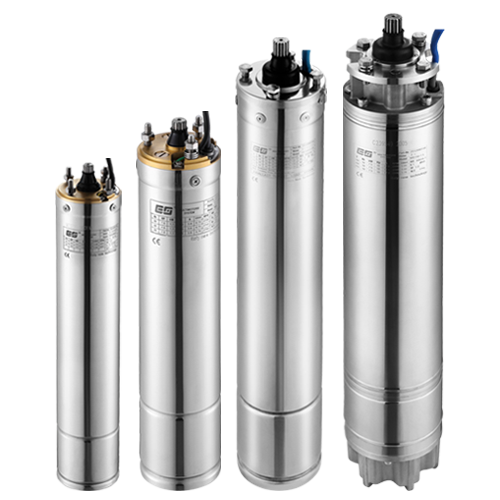
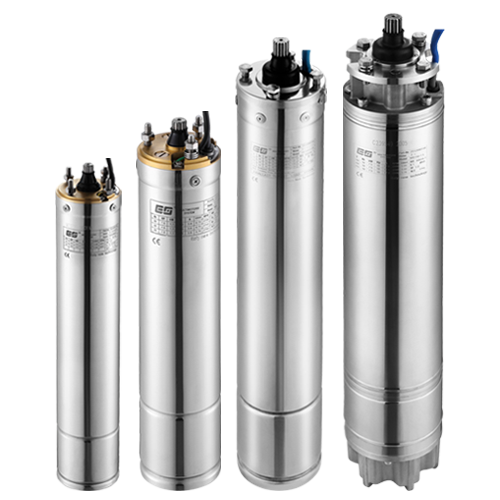
A deep well submersible pump is an electric pump fully submerged in a borehole or well, designed to push water up from significant depths — often 100 meters or more, depending on the model. These pumps run on grid electricity or, in off-grid settings, a generator.
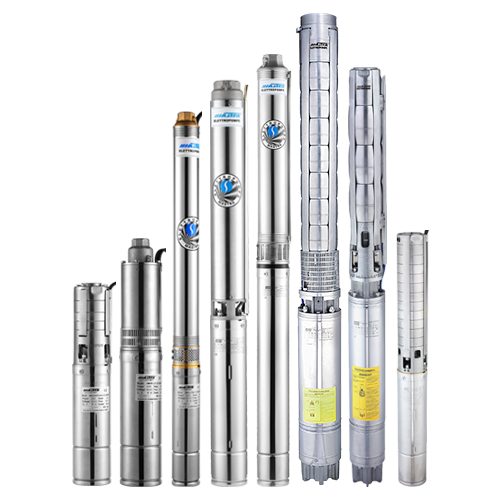
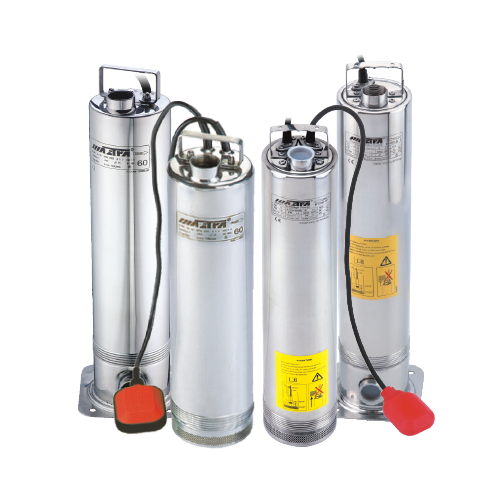
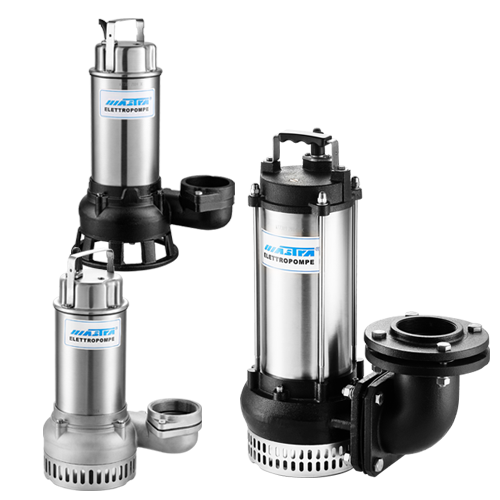
Deep well submersible pumps are built with stainless steel housings and multistage impellers to handle high-pressure, high-depth applications. Manufacturers like MASTRA produce these pumps in a range of sizes (from 3-inch to 10-inch models), suited to residential wells, agricultural irrigation, and mining dewatering.
What Is a Solar Submersible Water Pump?
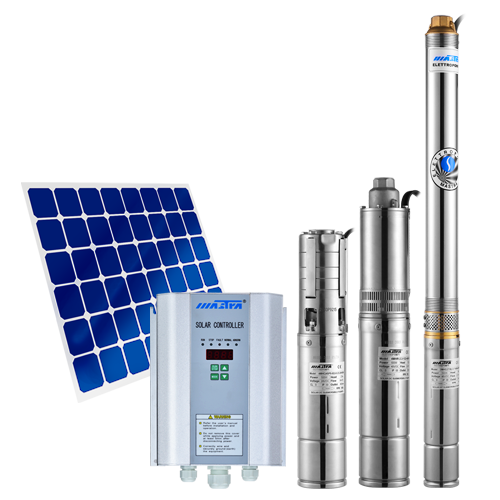
A solar submersible water pump is a submersible pump powered by photovoltaic (PV) panels instead of grid electricity or fuel. Solar panels convert sunlight into electricity, which either powers the pump directly (DC) or passes through a controller/inverter to run an AC pump.
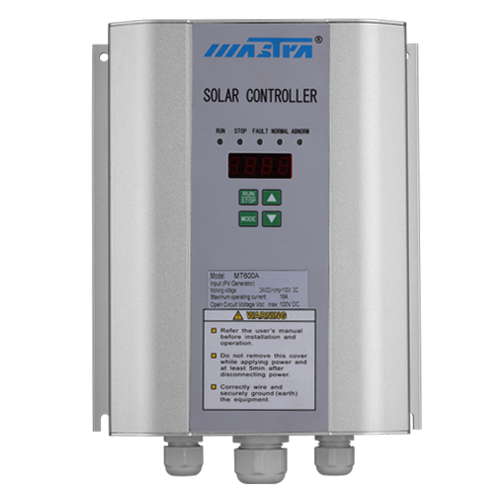
This setup is purpose-built for locations without reliable electricity, since it doesn't depend on the grid or a steady fuel supply. Complete solar water pump systems typically include the pump, solar panels, a controller, and mounting hardware, all sized to match the well's depth and required flow rate.
Solar vs. Electric Deep Well Pump: Which Should You Choose?
The decision between a solar-powered well pump and an electric deep well pump comes down to your site's power access, upfront budget, and long-term operating costs. Here's how the two compare directly:
When a Deep Well Submersible Pump Makes More Sense
If your project site already has stable, affordable grid electricity, a conventional deep well submersible pump is usually the simpler and more economical option. There's no need to invest in solar panels or a controller, and the pump can run continuously without depending on weather conditions. This makes it a strong fit for farms, residential properties, or facilities located near existing power infrastructure.
Key Factors to Consider Before Choosing
Confirm whether grid power is stable, intermittent, or unavailable at your site
Well depth and flow rate needs
Both pump types come in multiple sizes; match the pump's specifications to your well's depth and required output
Consider whether you're optimizing for lower upfront cost (grid/generator) or lower lifetime cost (solar)
Solar submersible pumps perform best in regions with consistent daily sunlight; cloudy climates may require battery backup or a hybrid system
Generators require fuel logistics and servicing, while solar systems need occasional panel cleaning and controller checks